
You start the engine on a cool morning and hear a sharp squeal from under the hood. A few seconds later, it goes quiet, and the car drives normally. The temptation is to ignore it because the sound disappears. That short burst of noise often means the serpentine belt is slipping or another part of the belt drive isn't moving properly. The timing points us toward the accessory drive, but the belt itself isn't always worn out.
Why the Serpentine Belt Makes Noise During Startup
The serpentine belt transfers crankshaft rotation to accessories such as the alternator, air conditioning compressor, and, on certain engines, the water pump or power steering pump. At startup, the belt must quickly accelerate these components. The alternator often works harder after the starter has drawn power from the battery.
If belt tension is weak or the ribbed surface is worn, the belt briefly loses grip against a pulley.
That creates the high-pitched squeal you hear. Once the belt warms up or the electrical load changes, the noise sometimes fades. Silence after a minute doesn't mean the belt drive is healthy. It means the conditions that exposed the slipping have changed.
Worn Serpentine Belt Ribs and Belt Tension
Older belts may show glazing, fraying, contamination, or visible cracks. Many modern belts use EPDM rubber that resists cracking even after substantial wear. Modern belt ribs gradually lose material. A belt without cracks still needs replacement if the ribs are worn beyond specification.
We examine rib wear, the belt edges, pulley alignment, and tension along with age and mileage.
A belt that rides unevenly across the pulley grooves wears faster and becomes noisy. The right tension is crucial because too little lets the belt slip, while excessive tension stresses bearings. Most automatic tensioners aren't adjusted by tightening a bolt. Worn tensioners are replaced after their condition is confirmed.
Weak Belt Tensioner or Worn Idler Pulley Bearings
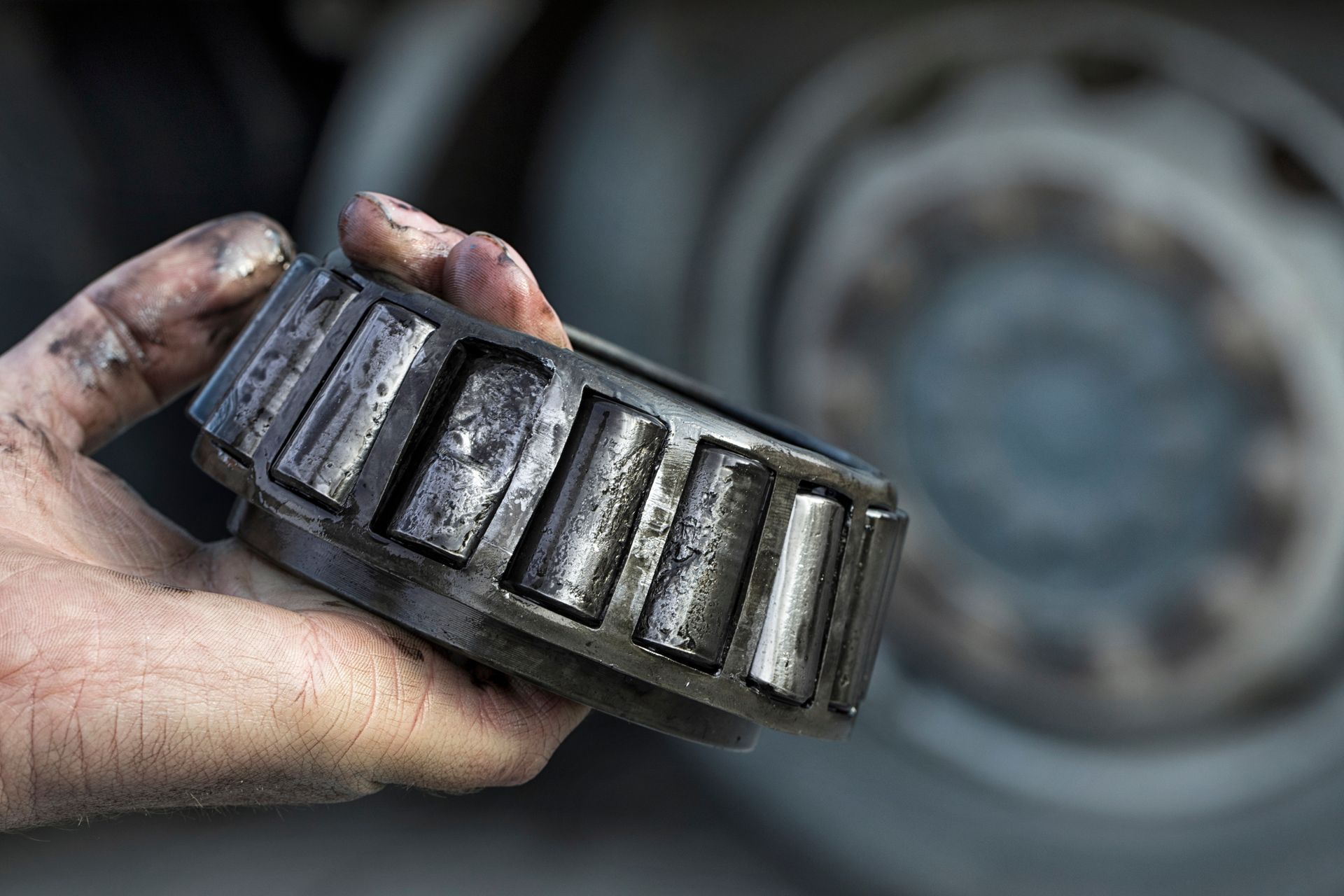
The automatic tensioner uses spring force to keep the belt correctly loaded as the engine runs. If the spring weakens, the pivot binds, or the tensioner arm begins bouncing excessively, the belt loses steady contact with its pulleys. A worn tensioner pulley or idler bearing also produces squealing, chirping, or grinding sounds.
Sometimes the squeal seems to come from the belt but actually comes from a bearing behind it. With the engine safely shut down, the pulleys and tensioner are checked for misalignment, rough bearings, and unwanted movement. A new belt installed over a failing tensioner often starts making the same noise within days. Replacing the noisy part without checking the entire accessory drive invites a repeat visit.
Rain, Oil Leaks, and Coolant on the Belt
Moisture sometimes makes an already marginal belt squeal more noticeably, especially after rain or a damp overnight stop. One brief squeal during wet weather doesn't prove the belt has failed. Repeated squealing calls for a belt-drive inspection. If engine oil, power steering fluid, or coolant reaches the belt, the rubber and gripping surfaces can deteriorate.
A valve cover leak or cooling system seepage near the pulley area sometimes leaves contamination that keeps returning.
Wiping the belt doesn't repair the leak, and belt dressing is not a recommended fix for modern serpentine systems. It can temporarily mask the sound while leaving the worn belt, damaged tensioner, or leaking component untouched. We trace the contamination back to its source.
Signs the Serpentine Belt Drive Needs Inspection
Listen for more than the first squeal. A short chirp once per rotation suggests a different cause than a long continuous squeal under heavy electrical load. Noise after the A/C engages also helps us narrow the search to the affected pulley or accessory.
Bring up these symptoms when scheduling service:
- Squealing for several seconds after startup
- Noise that gets louder with the A/C on
- Visible fraying or rib wear on the belt
- A wobbling or vibrating belt tensioner
- Battery charging or steering-related warnings
Never put your hands, tools, or clothing near the belt while the engine is running. Rotating pulleys are dangerous even at idle, and the noise is best checked with proper equipment.
Can a Bad Alternator Pulley Make the Belt Squeal?
Yes. Some alternators use a decoupler or overrunning pulley designed to reduce belt vibration as engine speed changes. When that pulley stops working correctly, the tensioner may bounce, and the belt can chirp or slip. A seized accessory bearing can also overload the belt drive and make noises before it fails completely.
This is why we don't assume the rubber belt is responsible just because the squeal is coming from the front of the engine. The alternator pulley, crankshaft pulley, idlers, tensioner, and accessories have to be examined as a system. A new belt won't silence a bearing that's already failing in one of the pulleys.
When a Squealing Serpentine Belt Becomes Urgent
If the belt shreds or comes off, accessories driven by it stop working. The alternator may stop charging, and on some engines the water pump or power steering pump also stops. That turns an annoying noise into an engine overheating or steering problem. The risk depends on the vehicle's belt arrangement, not just how loud the squeal sounds.
If the battery warning appears, steering effort changes suddenly, or the temperature climbs along with belt noise, stop where it's safe and shut the engine off. Don't keep driving in hopes that the noise will disappear again. Arrange a belt inspection for recurring startup squeals. If warning lights appear or belt-driven accessories stop working, pull over safely and arrange service.
Get Serpentine Belt and Pulley Repair in Oregon City, OR, With Mountain Tech Inc.
Mountain Tech Inc. in Oregon City, OR, inspects serpentine belts, tensioners, pulleys, and accessory drive components to find the source of startup squealing. We'll check the surrounding parts so a replacement belt isn't installed over the same unresolved problem.
Have the belt drive inspected before a morning squeal turns into a roadside breakdown.